By Enrico Giovannini, Peter Benczur, Ana Boskovic, and Jessica Cariboni
The European Commission’s sustainable and inclusive well-being initiative can support a global consensus on how to go ‘beyond GDP’
The disruption of established lifestyles by the COVID-19 pandemic, especially in young generations, has reignited the long-standing ‘beyond GDP’ debate on the kind of economic development that is desirable, and on what actually matters for human well-being in a world of finite resources. The triple planetary crisis (climate change, biodiversity loss, and pollution), financial crises, persisting poverty, social exclusion, and increasing inequality and societal polarization, in a context of demographic stagnation or decline in developed countries, all call for political objectives beyond gross domestic product (GDP) alone.
In this context, people’s well-being has been gaining political traction as an explicit and transversal political objective in the EU. It is enshrined in the Treaty on European Union, which states that “[t]he Union’s aim is to promote peace, its values and the well-being of its people.” There is a wide range of related activities across the Commission, reflecting the political attention given to well-being. For example, the UN’s SDGs and the European Pillar of Social Rights are now reflected in the European Semester’s competitive sustainability framework, addressing inclusiveness (fairness) and environmental sustainability aspects in social and economic policy coordination, recognizing that an economy must work for people and the planet. The Eighth Environment Action Programme aims to ensure well-being for all within the planetary boundaries, adding a sustainability dimension to well-being. This is further extended by the recently launched work on the EU’s Intergenerational Fairness Strategy, looking at the balance between the well-being of current and future generations.
The notion of sustainable and inclusive well-being (SIWB, or sometimes: inclusive and sustainable well-being) – in our interpretation: the well-being of all people of the current and future generations, and of the planet – thus puts these three most important societal objectives (well-being, inclusiveness, and sustainability) together. Thus, it is increasingly seen as a new consensus term for ‘beyond GDP’ – as also advocated by the Horizon research consortia WISE Horizons and MERGE, for example. Similarly, the UN Network of Economic Statisticians is working on an overarching framework for inclusive and sustainable well-being. The High-Level Expert Group recently established by the UN Secretary General to make proposals on the same issue, as foreseen by the Pact of the Future agreed by the UN Member States in 2024, is inclined to use the SIWB language as a key reference. Such convergence to a common terminology can level the playing field between the highly standardized and polished framework of the System of National Accounts and the so far heterogenous beyond GDP approaches.
With the announcement of the SIWB initiative in its 2023 Strategic Foresight Report, the European Commission has been a frontrunner in the field and a strong supporter and developer of this new consensus. A 2024 report of the European Commission outlined a measurement framework for SIWB. This was followed by the release of a practical measurement system, consisting of two layers of selected statistical indicators from existing EU and leading global indicator frameworks, and a corresponding set of summary (synthetic) indices. As such, this was the first complete pilot European measurement system following the logic of sustainable and inclusive well-being. The 2025 Strategic Foresight Report marks the dashboard of sustainable and inclusive well-being indicators “mature enough to be embedded into policy evaluation, and investment and reform decision-making,” and calls for strengthened cooperation with the OECD and the UN to “develop ‘beyond GDP’ frameworks, building on the 2030 Agenda and their sustainable development goals.”
The sustainable and inclusive well-being dashboard and other metrics
Drawing on a collaborative process across the European Commission, we have compiled a dashboard of 140 indicators, further streamlined into a smaller dashboard of 50 indicators. To facilitate their visualization and communication, we constructed synthetic indices across the entire dashboard and its six main components (see Figure 1 for the components and their further refinement into dimensions): well-being today (or current well-being); social and economic resources for future well-being; resilience to societal challenges and sustainability transitions; nature and planetary boundaries; inclusiveness; and institutional capacity and quality.
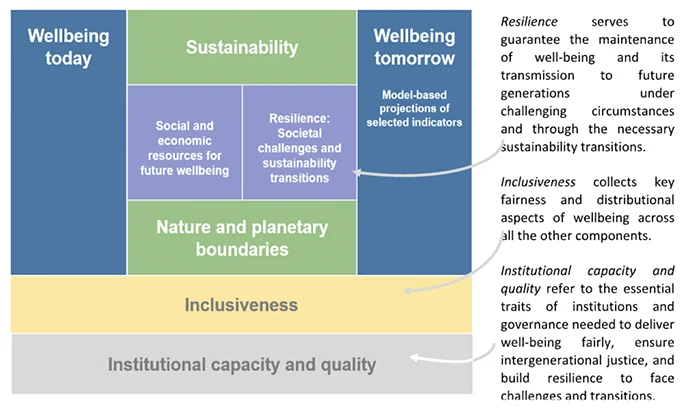
Figure 1: The structure of the SIWB dashboard. Source: https://publications.jrc.ec.europa.eu/repository/handle/JRC141068
The patterns of the indices reveal that the key drivers of well-being are not solely economic factors. Other factors, such as social relationships, environmental conditions, and access to social and healthcare systems also play a significant role. The analysis shows that well-being in the EU has increased over the past decade (see Figure 2), but it varies across Member States, with some countries having a good situation in certain areas while struggling in others. The trend of well-being aligns with that of GDP per capita (blue line), though current well-being improved more in percentage terms.
The dashboard is currently being extended to other key geopolitical actors, to allow for global comparison. This will allow for better assessment of EU’s position vis-à-vis the US and other countries (mainly Organisation for Economic Co-operation and Development (OECD) members, due to data availability constraints). As an illustration of such a comparison, Figure 3 displays a more condensed, experimental approach of a monetary well-being metric. It is an adjusted version of aggregate income, that reflects individuals’ willingness to pay for a higher lifespan, and society’s willingness to pay for a more equal distribution of their lifespan and income. While the income of households is higher in the US in the entire period of 2000-2022, the higher and more equal distribution of the lifespan in the EU already closes a large part of the gap. Together with income inequality, the comparison already reverses in around 2010, even for a moderate level of societal inequality aversion. Though the measure is still being refined, it already illustrates powerfully how traditional metrics like average income alone can misrepresent which society is actually better off overall, when inequality is taken seriously.
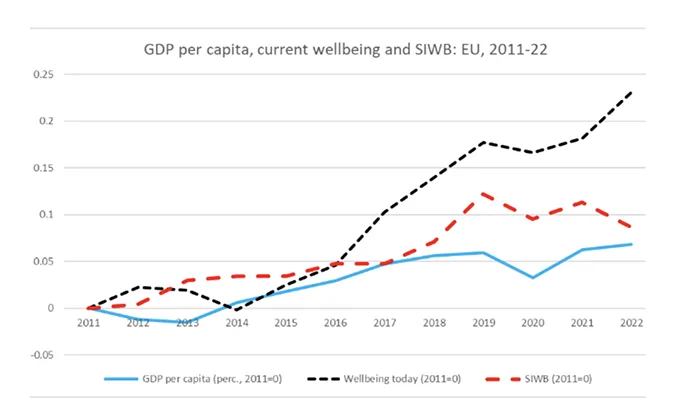
Figure 2: Well-being in the EU
Source: https://publications.jrc.ec.europa.eu/repository/handle/JRC140456
The overall SIWB and the well-being today lines are composite indicators, showing a trend which is the result of different underlying indicators. Together with GDP per capita, they all refer to percentile positions in the pooled 2011-2022 values of all EU member States, relative to 2011.
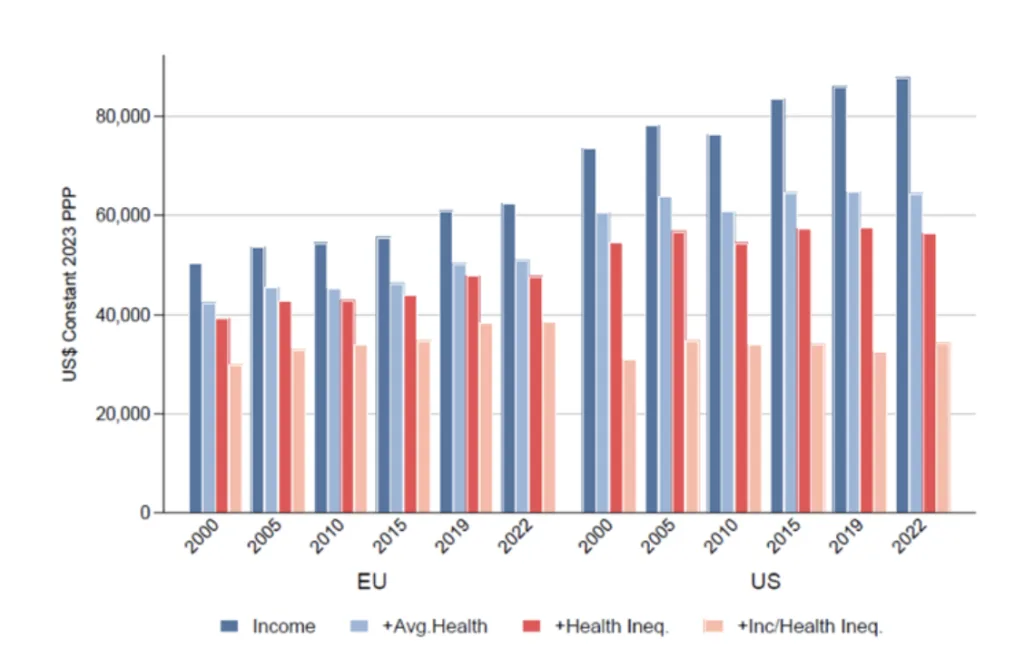
Figure 3: An EU-US comparison of equivalent income
Source: https://publications.jrc.ec.europa.eu/repository/handle/JRC141950
The equivalent income approach begins by integrating life expectancy and lifespan inequality into welfare measurement. Next, the method integrates income inequality into the welfare calculation. Finally, it combines these elements into a single, comparable welfare metric: the level of income a country would need – if it had no inequality and featured ideal health outcomes – to match its actual welfare.
In times of renewed discussions around the need to boost the competitiveness of the EU, the framework adds an important directionality to competitiveness: to use resources efficiently to deliver well-being to people in a sustainable and inclusive way. In particular, some of the outputs of every country’s broad economic system are not measured directly in economic accounts (like domestic production, health outcomes, inequalities, or the state of the environment and climate). If a country devotes more of its resources to such unmeasured elements of societal well-being than another country, then a purely GDP-based comparison (of progress, prosperity, or well-being) can be misleading.
Specific challenges for getting beyond GDP
Building expert consensus on the structure of the framework: Defining and scoping the general approach to assess well-being is a crucial step in the process, as it enables the identification of the key factors and relationships that the framework should represent and their visual arrangement. A collaborative method is necessary to make sure there is sufficient agreement on the proposed approach. To identify the main ingredients of the framework, we reviewed the most salient existing approaches adopted by individual countries or international organizations.
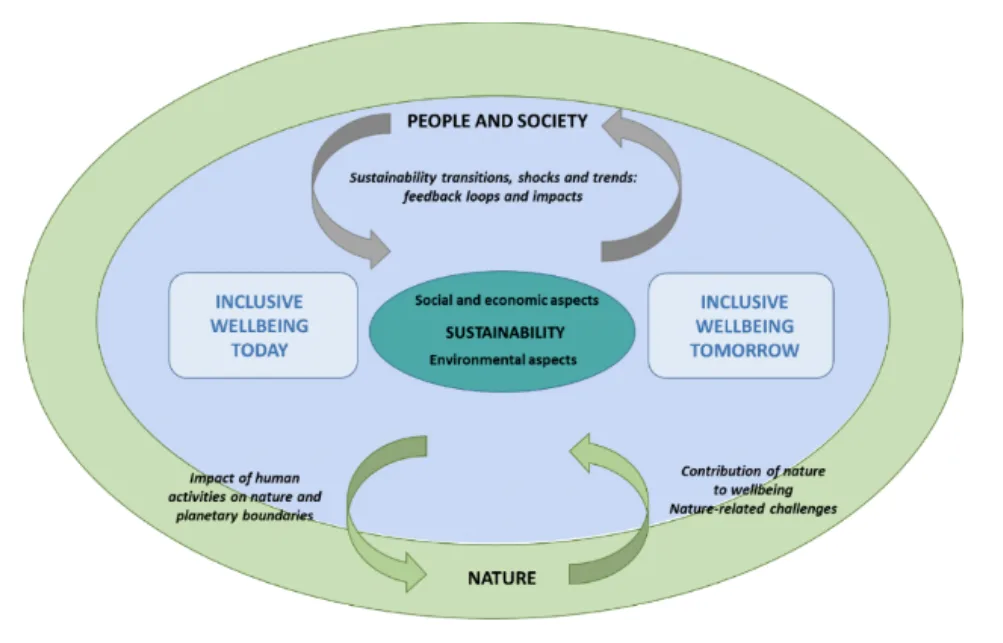
Figure 4: Visual representation of the SIWB framework
Source: https://publications.jrc.ec.europa.eu/repository/handle/JRC137910
The framework adopts a strong sustainability perspective, where society is deeply embedded within nature (inspired by the doughnut approach of Raworth, 2017), and nature’s role goes beyond being just one of the capitals. In the long term, it emphasizes the importance of preserving socio-economic and natural capitals for future generations, and places resilience at its center, recognizing its central role in facing various challenges and shocks that can impact well-being. It also considers the interconnectedness of societal and environmental challenges, such as the green transition, climate change, and natural disasters, which are all intertwined with human well-being and the planet’s boundaries.
Figure 4 offers a simplified visualization of the framework, while some of the main agreed features are detailed here:
- It distinguishes between well-being (for all) todayand tomorrow – resources for future well-being,rooted in the Brundtland approach to sustainable development and the first Stiglitz report.
- It considers explicitly the distributive aspects of well-being in several domains and gives a central role to both inclusiveness and intergenerational fairness.
- It encompasses social, economic, and environmental aspects of sustainabilityby looking at capitals for future well-being, and by recognizing the importance ofresilience. The incorporation of resilience represents a novelty with respect to the existing approaches monitoring well-being.
- It gives a prominent role to nature, recognizing its critical role in human existence and well-being, and considers its intrinsic value beyond its utility, considering its status, contributions to people, and the impact of human activity on it (including planetary boundaries).
- Finally, the framework recognizes the importance of institutions and governance for ensuring current and future well-being and its fair distribution, intergenerational justice, and resilience.
Synthetizing and streamlining existing indicator frameworks: There are many measurement frameworks that address various aspects of social, economic, and environmental well-being. However, our assessment of existing EU and some leading global tools (Figure 5) reveals a fragmented landscape, where sector-specific frameworks tackle focused aspects of well-being in individual policy areas, resulting in reduced overall coherence and effectiveness. Despite numerous sector-specific frameworks and the richness of information they offer, there is a need for a holistic tool that integrates the essential elements of a well-being economy. Such an integrated approach can facilitate the streamlining of existing policymaking tools, as envisaged for example in article 3e of the Eighth Environment Action Programme.
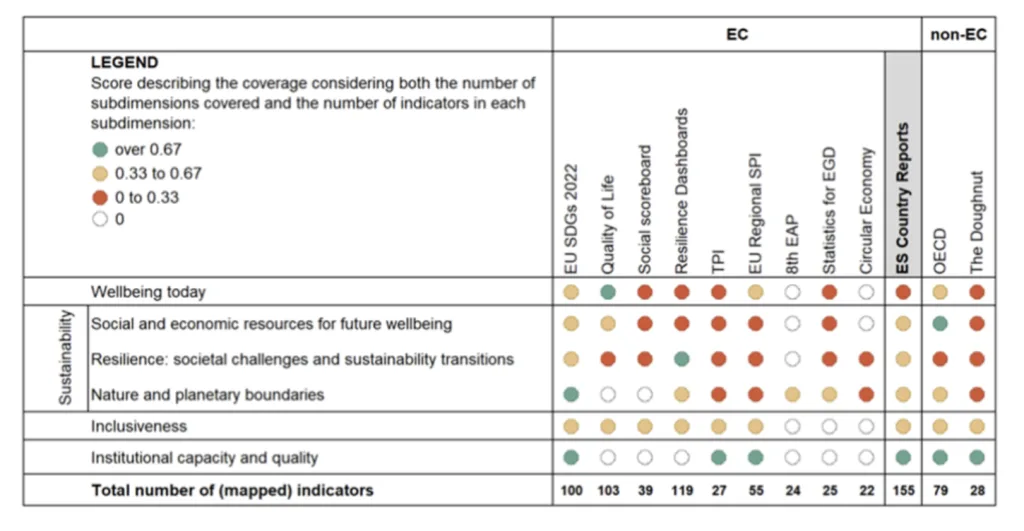
Figure 5: Mapping of existing monitoring tools to SIWB components: coverage by components
Source: https://publications.jrc.ec.europa.eu/repository/handle/JRC137910
Building expert consensus for overcoming the curse of multidimensionality: We started from more than 1,000 indicators, pulled from around 25 relevant frameworks, and progressed towards refining these into a final, curated set of 140 indicators across six component, 21 dimensions, and 58 sub-dimensions, which now constitute a comprehensive SIWB dashboard. The process involved two consultation rounds with the relevant Commission services on the relative importance of each indicator in each policy area, and a statistical analysis. Throughout each phase, a set of selection criteria (relevance for well-being and policies, credibility, prevalence in key frameworks, and data availability and quality) was systematically applied to strike a balance between the relevance and availability of alternative indicators.
The ultimate number of 50 indicators for the lean dashboard represents a good balance of size and comprehensiveness. Considering the involved technical discussions within the Commission, it seemed hard to further narrow the choice without losing the consensus of the comprehensiveness of the indicator set. While some extra streamlining may be possible in future work, having a consensus on 50 indicators remains a major added value of this complex process and the resulting pilot dashboard. It can also serve as a meaningful starting point for an even broader participatory process, reaching out also to citizens.
Some key recommendations for practitioners to go beyond GDP
- Adopt a holistic and integrated approach: Consider the social, economic, environmental, and institutional dimensions of prosperity and their interconnectedness.
- Prioritize a limited number of indicators: Select a curated set of indicators that balance size and comprehensiveness.
- Balance relevance and availability of indicators: Ensure that the selected indicators are carefully chosen to maximize their relevance, while also considering their data availability and potential for consistent measurement across countries.
- Consider the distributive aspects of well-being: Account for inequalities in the distribution of well-being dimensions and prioritize inclusiveness and intergenerational fairness.
- Foster collaboration: Build a participatory process to account for different voices, to build a broad consensus and ownership, while remaining flexible to adapt to country-specific needs and contexts.
* * *
Enrico Giovannini is with University of Rome Tor Vergata and the Italian Alliance for Sustainable Development (ASviS).
Peter Benczur, Ana Boskovic, and Jessica Cariboni are with the European Commission’s Joint Research Centre (JRC).
The opinions expressed in the paper are those of the authors only and are by no means representative of the European Commission’s official position.
This guest article is part of a series that seeks to raise awareness of efforts to advance metrics that go beyond GDP, focusing primarily on publications produced by international agencies, peer-reviewed journals, and news stories. By highlighting topics of theoretical and conceptual significance, including suggestions and applications of specific indicators and indices to complement GDP, the series aims to inform and support sustainable development decision makers in their efforts to go beyond GDP. This project was made possible through financial support provided by the International Development Research Centre (IDRC).